Natural Fly Spray for Horses in the UAE: A Summer Stable Guide
- August 17, 2026
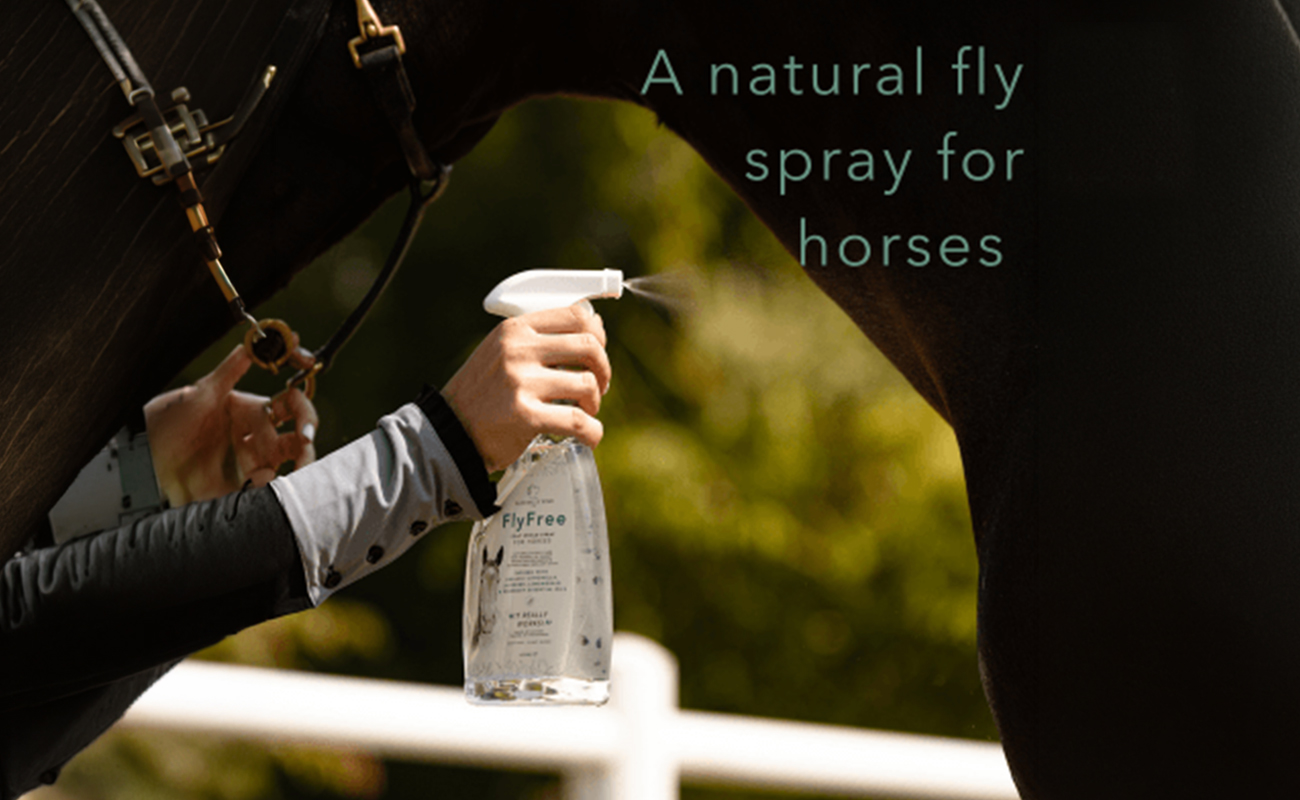
Fly season on a UAE equine yard is a specific challenge. Heat, humidity, dust, sensitive coats and long turnout hours mean a fly repellent has to be effective, kind on the skin, and easy to keep up with day after day.
The UAE fly challenge
Flies, midges and biting insects become active as evening temperatures ease and stay active from October through spring. In the stables, that means daily exposure across turnout, schooling and stable time. Sensitive horses feel it fast: rubbing at the mane and tail, hair loss on the belly midline, head-tossing under saddle. Sweet-itch prone horses can suffer badly.
Why FlyFree
FlyFree Coat Shield is our natural equine fly and insect repellent balm and spray, made in the UAE for horses, ponies and donkeys. It blends citronella, lemongrass, lavender and rosemary into a gentle formulation applied directly to coat and skin.
Owners tend to notice three things.
The smell. Plant-based fragrance that does not linger on your hands or grooming kit.
The skin behaviour. Sits on coat and skin without stinging, even around sensitive areas.
The peace of mind. DEET-free, fully plant-based, which is why sensitive and sweet-itch prone horse owners reach for it in the first place.
The range comes in 650 ml Coat Shield Spray, 500 g Coat Shield Balm and 5 L refill formats.
How to apply
Start with a clean coat. Apply over a damp coat after washing, or on a dry coat after grooming. Focus on the areas flies target most: around the ears (carefully, never in them), the eyes (also carefully and never in them), shoulders, belly midline and around the dock. A little goes a long way.
For sweet-itch prone horses, apply along the mane crest and around the tail head with extra care and reapply through the day.
How often to reapply
Once or twice a day during fly season, more often after heavy work, washing or rain. A typical stable rhythm: full application after morning grooming, midday top-up on sensitive areas, full reapplication late afternoon before evening turnout.
Patch-testing
Every horse is different. Before your first full application, patch-test on a small area of coat and wait 24 hours.
Stable routines that hold up
The stables that get through the season comfortably keep FlyFree exactly where it is used: a tub in the tack room, a spray in the grooming bay, a spare in the trailer for travelling. They combine repellent protection with environment management (mucking out promptly, clean water troughs, knocking down standing water). And they use fly masks and rugs alongside FlyFree, not instead of.
For UK horse owners
For horse owners heading to the UK, the same formula is available under the name FlyDefence, launching in the UK around HOYS 2026.
Ready to try a gentler fly repellent? Shop FlyFree.
The Naturally Kind Co. It Really Works. From rescues to champions, we protect them all.


