Midge Season in Scotland and the North: Protecting Your Horse Through Summer
- August 21, 2026
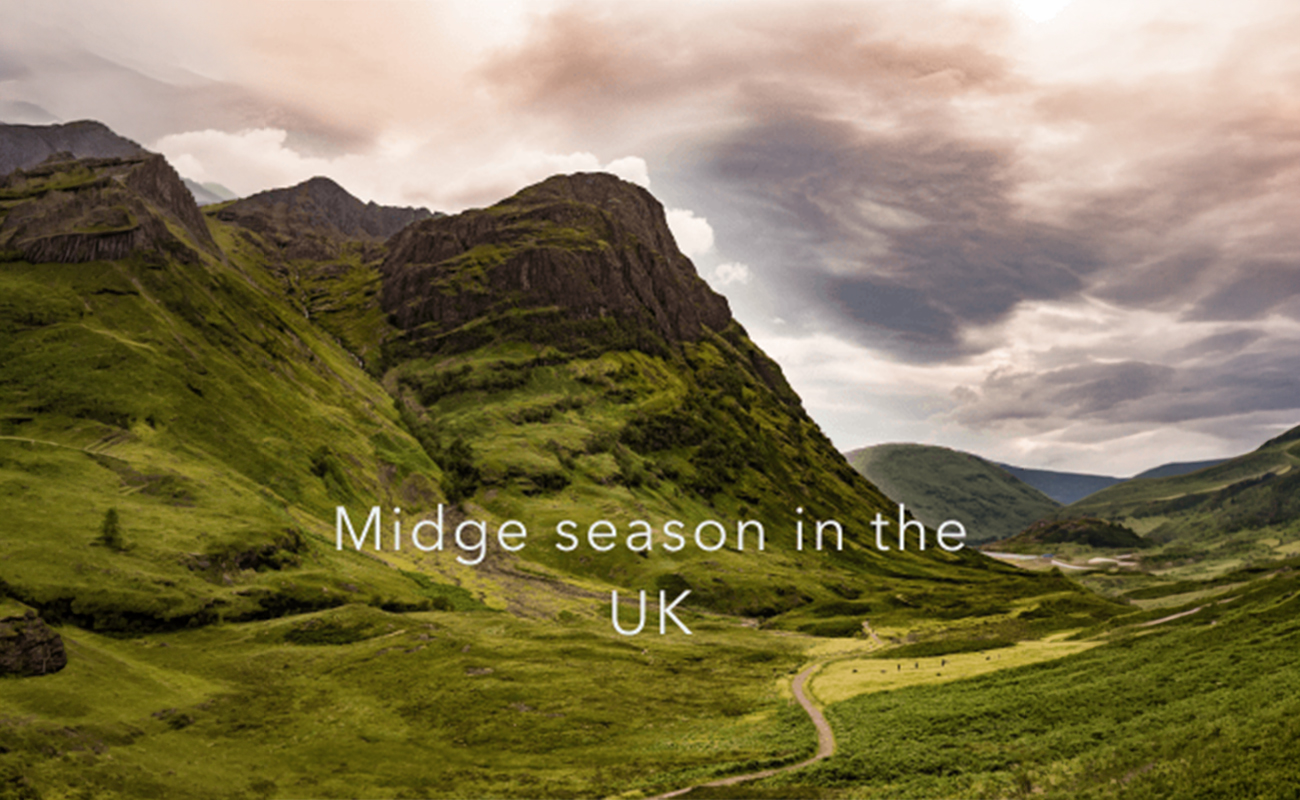
If you keep horses in the Scottish Highlands, the western coast, the Lake District, north Wales or anywhere north of the M62, you know midge season is a different sport up here.
When midge season starts in the North
Culicoides midges in northern and western Scotland are active from late April through October. Peak activity runs June through August, with a punishing second wave in early September in warm autumns. In the western Highlands and the Argyll coast, midge season starts earliest and finishes latest. Treat May through September as full midge season.
Why the North is midge country
High humidity. Midges thrive in humid air. Northern and western UK summers spend much of the season in exactly the humidity range midges love.
Still air. Midges cannot fly well above around 5 mph. Sheltered glens, wooded riversides and low-lying paddocks near lochs are the worst environments because they hold still air even on breezy days.
Vegetation and water. Rushes, wet meadows, boggy corners of paddocks and the edges of woodland streams are ideal breeding grounds.
The two-window rule
Dawn: roughly the first two hours after sunrise. Still, damp, low light.
Dusk: roughly two hours before and after sunset. Same conditions. Often worse than dawn because midge populations have built through the warm day.
Stable through both windows and you have removed the largest single chunk of midge exposure from the day.
Physical protection
Well-fitted fly rug during turnout, full neck cover and belly panel for sweet-itch prone horses. Full-face fly mask protecting eyes, ears and around the muzzle. Stable screens on windows and doors, closed during the two peak windows. Fans in the stable during dusk. Turnout on higher, more exposed ground where possible.
FlyDefence in a northern stable routine
FlyDefence Coat Shield (spray, balm and 5L refill) sits comfortably in a northern stable routine as the skin-side complement to physical protection.
Apply during morning grooming to the classic midge-target areas: around the ears (carefully, never in them), mane crest, belly midline, tail head. A little goes a long way. Reapply midday and again before evening.
Patch-test first. Do not apply to broken skin or open lesions. For sweet-itch horses with active hot spots, let those heal and reintroduce FlyDefence to intact skin.
Competition weekends in midge country
Pack a spare tub or spray for the truck plus a spare rug and mask. Arrive with enough time to settle the horse before dusk. Choose stabling with air movement if possible. Reapply lightly before the class if the horse shows midge irritation; it will not affect performance and it will keep the horse focused rather than shaking off feeding midges in the collecting ring.
Where the North differs from the South
Southern English yards often manage midge season with a lighter touch. That approach does not hold up in the North. If you have relocated a horse: earlier and later application windows, heavier physical protection, more disciplined turnout timing and location. Do not interpret a horse’s discomfort as a temperament change. It is almost always the midges.
Where to buy
Amazon UK currently. UK retail partners after HOYS 2026.
The Naturally Kind Co. It Really Works. From rescues to champions, we protect them all.


